
Signs Your Garage Door Opener Is About To Fail
Warning Signs Your Garage Door Opener Is Failing
Most garage door openers do not fail all at once. They give warning signs for weeks or months before they stop working entirely. Knowing what to look for helps Highland and Lake County homeowners catch problems early and avoid the frustration of a door that will not open on a cold morning or when you are in a hurry.
The Opener Responds Slowly or Takes Longer Than It Used To
A well-functioning garage door opener responds within a second or two of pressing the remote. When that response time starts stretching out, when there is a noticeable pause before the motor engages or the door begins to move, that delay is worth paying attention to.
Slow response can point to a weakening motor, worn internal components, or electrical issues developing inside the unit. It can also indicate that the opener is working harder than it should to move the door, which is often a sign that something in the system is resisting movement or that the motor is losing the capacity to handle the load.
Grinding, Straining, or Unusual Noises During Operation
A garage door opener that suddenly sounds different is communicating a problem. Grinding noises typically point to worn or stripped gears inside the opener unit itself. A straining or laboring sound from the motor suggests it is working beyond its normal capacity. Rattling or vibration noises can indicate loose hardware either in the opener or on the door itself.
Any new noise that was not present previously is a signal worth investigating. What starts as an occasional grind often progresses to a mechanical failure if the underlying issue is not addressed.
The Door Reverses Before Fully Closing or Opening
Modern garage door openers are equipped with safety sensors that detect obstructions in the door's path and reverse the door to prevent damage or injury. When the door starts reversing on its own with no obvious obstruction present, it typically means the sensors are misaligned, dirty, or failing.
It can also mean the force settings on the opener are out of calibration. When the opener's force limit is set too low, the motor interprets normal resistance from the door's own weight or weatherstripping as an obstruction and reverses. Either way, a door that will not stay in its intended path is both an inconvenience and a safety concern worth addressing promptly.
The Remote Only Works at Very Close Range
Garage door remotes are designed to operate the opener reliably from the end of the driveway or further. When you notice that the remote only triggers the opener when you are within a few feet of the garage, the range has degraded significantly from what it should be.
Shrinking remote range is sometimes a battery issue, but when a fresh battery does not restore normal range, the problem shifts to the receiver inside the opener unit. A failing receiver is a component-level issue that often signals the opener is nearing the end of its reliable service life.
Vibration or Shaking During Operation
Some vibration during operation is normal, particularly with older chain drive openers. Vibration that has increased noticeably, that shakes the ceiling, or that is accompanied by noise that was not previously present, points to worn mounting hardware, degraded drive components, or a motor that is no longer running smoothly.
Left unaddressed, excessive vibration accelerates wear on both the opener and the door hardware it is connected to. What begins as a vibration issue can create secondary problems with the tracks, rollers, and door panels over time.
The Opener Runs But the Door Does Not Move
This is one of the clearest mechanical failure signs an opener can show. When the motor runs and you can hear it cycling, but the door does not move, the drive system has failed. In chain and belt drive openers, this most commonly means the drive gear has stripped. In screw drive openers, the carriage may have broken loose from the rail.
A door that does not move when the opener runs is not going to fix itself. The opener either needs an internal component replaced or, depending on its age and condition, a full unit replacement may be the more cost-effective path forward.
How Old Is Your Garage Door Opener?
Most residential garage door openers have a reliable service life of roughly 10 to 15 years under normal use. Commercial openers built for higher cycle counts can last longer, but they also face more wear from heavier daily use.
An opener approaching or past that range that is showing any of the symptoms above is a strong candidate for replacement rather than continued repair. At some point, putting money into an aging unit with multiple failing components does not make financial sense compared to installing a new opener with modern features, a fresh warranty, and reliable performance.
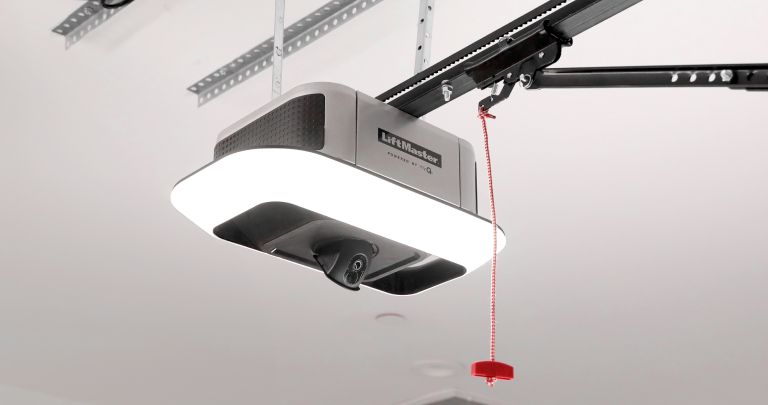
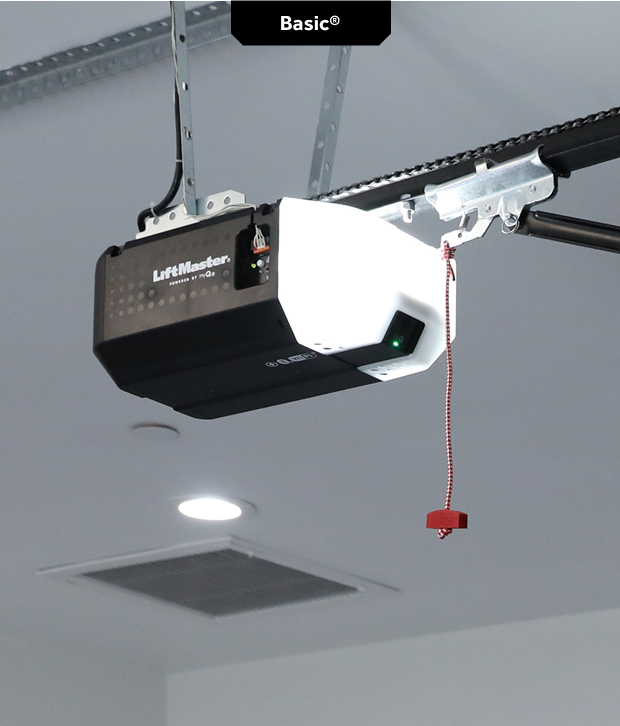
Crawford Door Sales is an authorized LiftMaster dealer and carries residential, commercial, and industrial opener options to match any application in the Highland and Lake County area. LiftMaster openers offer a range of options from quiet belt drive systems suited for attached garages to heavy-duty commercial units built for frequent daily cycles.
Garage Door Opener Repair & Replacement in Highland & the Lake County, IN Area
Crawford Door Sales has been serving Northwest Indiana since 1967 with
garage door opener repair, replacement, and installation for residential and commercial properties. Our team services all makes and models and offers same-day repair in many cases. Whether your opener needs a component fix or it is time for a full replacement, Crawford Door Sales provides free estimates and backs every job with decades of experience in the region.
Contact
Crawford Door Sales today to schedule service in
Highland,
Crown Point,
Schererville, or
Dyer.